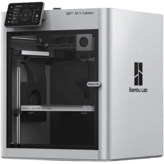
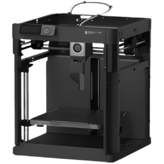
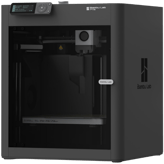
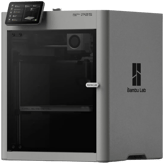
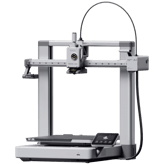
QIDI Max4 Reviews: See Why 0 Shoppers Rated It 0 Stars!
It’s not just hype. The QIDI Max4 3d printer earned its 0/5 from 0 real users. But what’s behind those stars?
 Supermod
  Moderator
 Recaptor
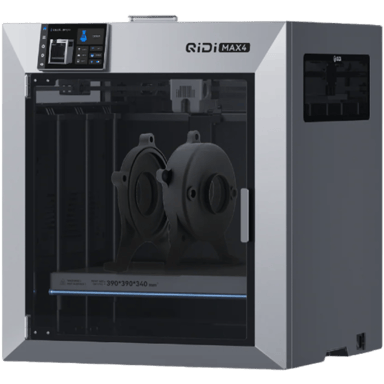
 QIDI Max4 3D Printer Review: A Powerful Choice for Advanced Creators
When it comes to sophisticated 3D printers designed for both advanced users and professionals, the QIDI Max4 strikes an impressive balance between precision, reliability, and user-focused features. Released in 2024, this FDM/FFF printer is built to serve prototyping needs with a robust set of specifications that demand attention. Based on its engineering data, the Max4 distinguishes itself through a combination of a sizable build volume, advanced hardware elements, and thoughtful software integration, making it a compelling option for anyone who requires dependable, high-definition 3D printing. That being said, does this printer truly deliver the performance its specs suggest? Let's dive deeper into the measurable details to find out.
Detailed Specs & Features of the QIDI Max4
On paper, the QIDI Max4 boasts a healthy build envelope measuring 15.35 inches in width and depth, with a build height topping out at 13.39 inches, providing a build volume of 4,843 cubic inches. This is more than ample for most consumer and professional prototyping needs. The printer operates on an internal power supply supporting 100-240 volts, which hints at versatility across different regions, alongside an energy consumption of 1,350 watts under load, balanced by an energy-saving mode that minimizes idle power to just 15 watts.
The one-extruder design with a direct drive system supports a broad spectrum of nozzle diameters from 0.2 to 0.8 mm, and can reach max extruder temperatures of up to 698°F, allowing for advanced materials like carbon fiber filament. The inclusion of a heated chamber with temperature control up to 149°F and a max bed temperature of 248°F shows serious consideration for material versatility, including those requiring strict thermal conditions. Hardware-wise, the printer uses a CoreXY frame type within a closed enclosure that features carbon air filtration to improve printing environment quality.
User Experience & Performance (Based on Specs)
Design & Build
Stylishly combining a compact footprint of roughly 22 by 22 inches in width and depth with a height just over 24 inches, the Max4 fits comfortably in many office or workshop settings. The CoreXY motion system, paired with belt-driven mechanics, contributes to a crisp, reliable motion that minimizes print vibration, a common pitfall in many FDM systems. What makes this notable is the printer's vibration compensation feature, enhancing print accuracy even at higher speeds. In daily use, the enclosed frame coupled with carbon filtration creates a safer, more environmentally conscious printing space, especially crucial when working with composite materials like carbon fiber. The sturdy frame and closed chamber are undoubtedly designed to maintain consistent thermal conditions, improving overall print consistency.
Performance
Expectations on performance are strong when you look at the official max print speed of 180 mm/s with an effective measured print speed of 300 mm/s, supported by quick-swap nozzles and direct drive extruder mechanics. The printer's auto-bed leveling and PEI-textured removable build plate make first-layer calibration mostly hands-off, a real boon for reducing print failures. Thanks to advanced sensors for filament runout and failure detection, supported by a 95% print success rate, the Max4 minimizes common printing headaches. The print recovery feature further underscores a thoughtful design aimed at ensuring resilient operation over long continuous print jobs, up to 72 hours in a single run, which is exceptional for a consumer/professional printer.
Camera & Display
The 5-inch touchscreen provides a vivid and intuitive interface with a resolution of 800x480p, making operation straightforward even for technically advanced tasks. The built-in camera allows users to visually track print progress remotely, a key feature for businesses overseeing several machines or remote operators. Operation noise is clocked at 50 dB during printing, which is relatively moderate for FDM printers, and the idle noise drops to a whisper at 35 dB. Lighting inside the chamber with configurable white light modes makes visual inspection effortless without opening the enclosure and disturbing the heated chamber environment.
Extra Features
The QIDI Max4 also impresses with several safety and maintenance aids, including an emergency stop button, overheat protection, and auto-shutdown on error; elements vital for unattended or overnight printing. The system supports tool-free maintenance with replaceable nozzles and self-diagnostics, supported by a respectable 500-print service interval. Although it only supports single-material filament printing, there is support for third-party materials and auto filament loading, supplementing professional workflows.
Pros & Cons
Pros
- Impressive build volume with excellent thermal control and a heated chamber for material versatility
- Advanced safety features, including emergency stop and overheat protection
- Modern connectivity options with LAN and remote monitoring via built-in camera
- Quick-swap nozzles and a direct drive extruder provide print quality and ease of maintenance
Cons
- Lacks multi-material or dual extrusion capabilities, limiting some complex print modes
- No Wi-Fi support could limit connectivity flexibility compared to some competitors.
Price & Value for Money
Listed at $1049 at $1049 at QIDI3D, the Max4's pricing reflects its status as a serious tool for professional prototyping and advanced enthusiasts. Given its warranty period of 1 year and robust power supply voltage adaptability, the investment feels justified relative to the specification set, especially with the specialized heated chamber and extensive safety certifications like RoHS compliance. Users prioritizing precision with carbon fiber filaments and a reliable workflow will find it a competitive choice. However, those needing dual extrusion or multi-material flexibility might need to look elsewhere.
Quick Take
In short, the QIDI Max4 excels in measurable print precision and safety, backed by thoughtful features like a heated chamber and remote monitoring. If we look at the numbers alone, it represents a well-engineered, reliable printer tailored for advanced users expecting consistency across diverse materials.
Closing Recommendation
The QIDI Max4 may be ideal for professional prototypers and advanced hobbyists who value a stable thermal environment and high print accuracy. It appears to perform best for those focusing on single-material prints demanding carbon fiber capability and robust safety measures. With its combination of specs, this printer helps users achieve dependable, quality printing with modern conveniences like LAN connectivity and live camera monitoring.
Verdict
Rating: Based on the specifications and overall feature set, we believe QIDI Max4 deserves 4.3 out of 5.
- Winner Feature => Heated enclosure with precise temperature control offers excellent material compatibility and print quality.
- Needs Improvement => Lack of dual extrusion and Wi-Fi connectivity limits versatility and convenience.
Reviews 0
The good, the bad, and the brutally honest.Average Rating

More 3D Printers 453
Unlock more awesome finds.